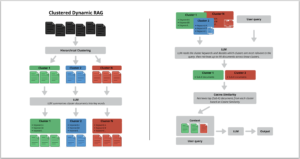
CDRAG: RAG with LLM-guided document retrieval
CDRAG CDRAG (Clustered Dynamic Retrieval-Augmented Generation): LLM-selected cluster retrieval for RAG — outperforms standard cosine retrieval on legal QAStandard RAG systems retrieve the top-K most

CDRAG CDRAG (Clustered Dynamic Retrieval-Augmented Generation): LLM-selected cluster retrieval for RAG — outperforms standard cosine retrieval on legal QAStandard RAG systems retrieve the top-K most

At Highberg, we developed Heidi, a Power BI analysis agent that changes how users interact with data. Instead of navigating complex dashboards, users can ask
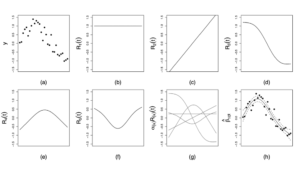
Detecting change isn’t as straightforward as it sounds When working with Ecological Momentary Assessment (EMA) data, researchers are often interested in whether psychological processes change
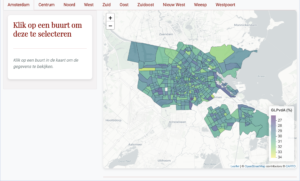
*Disclaimer: The values and predictions presented in this blog post are entirely random and do not reflect actual findings. Additionally, this project was not conducted on behalf

Confidence intervals (CIs) are a powerful and elegant way to quantify uncertainty in estimates. Instead of providing a single-point estimate—such as an average revenue increase
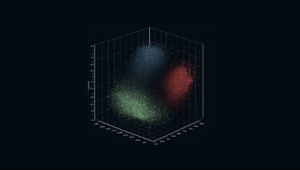
Clustering is a popular (unsupervised) technique in data science, widely used for discovering hidden patterns in data without having prior understanding of what such patterns